

Articles by Bert De Brabandere


Late vs early sensor fusion: a comparison
Sensor fusion is the process of combining data from multiple sensors (e.g. multiple cameras, lidars, and radars) to obtain a more accurate perception of the environment than what could be obtained by any individual sensor alone. It is a key technology in applications such as autonomous driving and robotics, which [...]

MCAP vs ROS bag: Simplifying Multi-Modal Sensor Data in Robotics
If you work with robotics or autonomous vehicle data, you're likely familiar with the challenges of efficiently storing and transferring multimodal sensor data. This can cause some headaches when sharing data with external vendors: How do you send over your recordings containing large volumes of lidar, radar, camera, and calibration [...]

Multi-sensor data labeling for robotics & AV: the path to full automation
This blog post is an adaption of Bert’s talk at the ICRA workshop on Scalable Autonomous Driving. Segments.ai is a data labeling platform focused specifically on data labeling for robotics and autonomous driving. In this post we peek behind the curtain on how we’re labeling multi-sensor data, and the steps we take to [...]

Faster labeling with Meta’s Segment Anything Model (SAM)
Last week, Meta unveiled a groundbreaking foundation model for image segmentation named SAM (Segment Anything Model). This advanced model has been trained on an impressive dataset of over 11 million images featuring more than 1 billion objects. SAM can perform one-click segmentation of any object from a photo. We’re [...]

Zero-shot object detection with OWL-ViT
What if you could detect objects of any type in an image, without having to train a custom ML model? That’s the promise of zero-shot object detection, a computer vision technique that’s gaining ground quickly. At Segments.ai we try to stay on top of the latest and greatest in [...]

Supercharge your Image Segmentation Labeling with Superpixels 2.0
Manually segmenting images using traditional tools requires painstaking precision, making the data labeling process painfully slow, error-prone, and labor-intensive. Many computer vision projects require a large dataset of accurate segmentation labels. At Segments.ai we’ve developed an ML-powered labeling tool called Superpixels to make image segmentation labeling faster and more [...]

Customizable Hotkeys and more
First things first: we’re happy to introduce you to our first employee Tobias who joined our team end of August. Off to a great start, the credit for our latest feature is all his! Introducing customizable hotkeys You know what’s even better than hotkeys? Customizable hotkeys. Many [...]

Automated Labeling Workflows with Webhooks
Summer break or not, we keep shipping new features at Segments.ai. Our highlight for this month is the release of the new webhook functionality, which makes it even easier to set up automated labeling workflows. Introducing webhooks Webhooks are automated messages sent to your server when something [...]
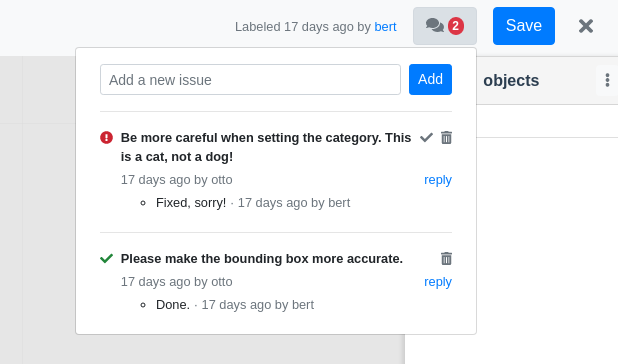
Better Reviewing and QA with Issues
This month, Segments.ai saw lots of improvements regarding labeling functionality, developer experience and documentation. Our highlight in this update is the release of a much-requested feature to keep track of issues. ? Issues functionality With this new feature, reviewers can create an issue when they discover labeling [...]
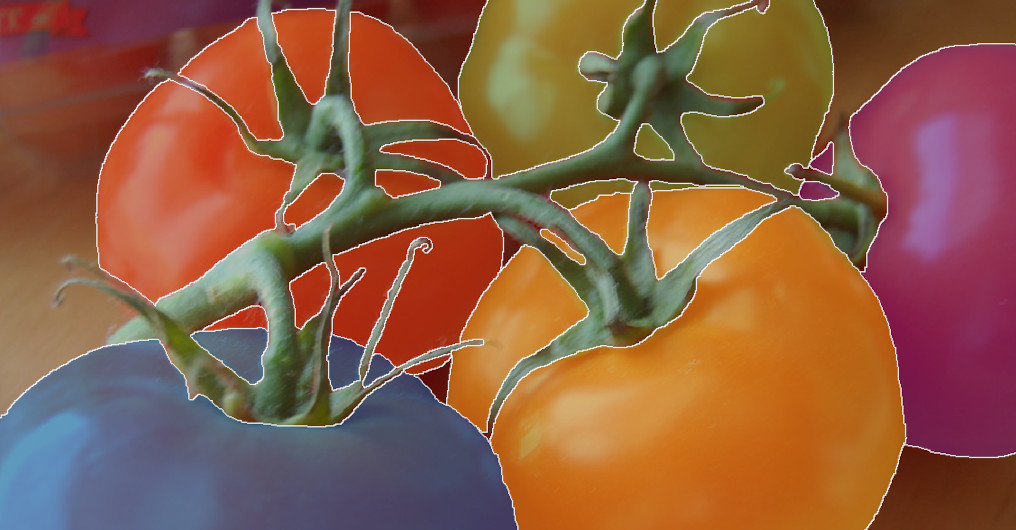
Speed up your Image Segmentation Workflow with Model-Assisted Labeling
A large dataset of labeled images is the first thing you need in any serious computer vision project. Building such datasets is a time-consuming endeavor, involving lots of manual labeling work. This is especially true for tasks like image segmentation where the labels need to be very precise. One [...]

Deploying PyTorch on AWS Lambda
Deploying PyTorch models cost-efficiently in the cloud is not straightforward. While GPU-accelerated servers can deliver results in real-time, they are quite expensive. CPU-only servers on the other hand are cheaper, but lack performance due to the computation intensive nature of deep learning. Serverless functions like AWS Lambda provide a [...]

